Compliance-Ready SaaS
SOC2 and HIPAA architecture, designed in from week one.
- SOC2
- HIPAA
- Audit logging
- Data residency
- Key management
Compliance after the fact is a tax. Every SOC2 readiness conversation that starts six months before the audit is a conversation about how much rework will fit in the window. The shape below is what we reach for when compliance is in the architecture from week one — not as a wrapper around it, but as the boundary that decides where state lives, who can read it, and what survives the audit.
Treat the audit as the system, not a wrapper around it.
Audit logging is structured from the first commit — every state-changing event carries an actor, a tenant scope, and a hash chain that detects retroactive edits. Secrets live in a managed key store; the application never sees the raw value. Data residency is a deployment decision, expressed in the same configuration that selects the database — not bolted on at the network layer later. PII flows are mapped from the schema upward, and every field that crosses a regulated boundary is annotated in code; the annotations are what the access reviews read, not a separate spreadsheet. The audit, when it comes, is a read of the system the team already operates.
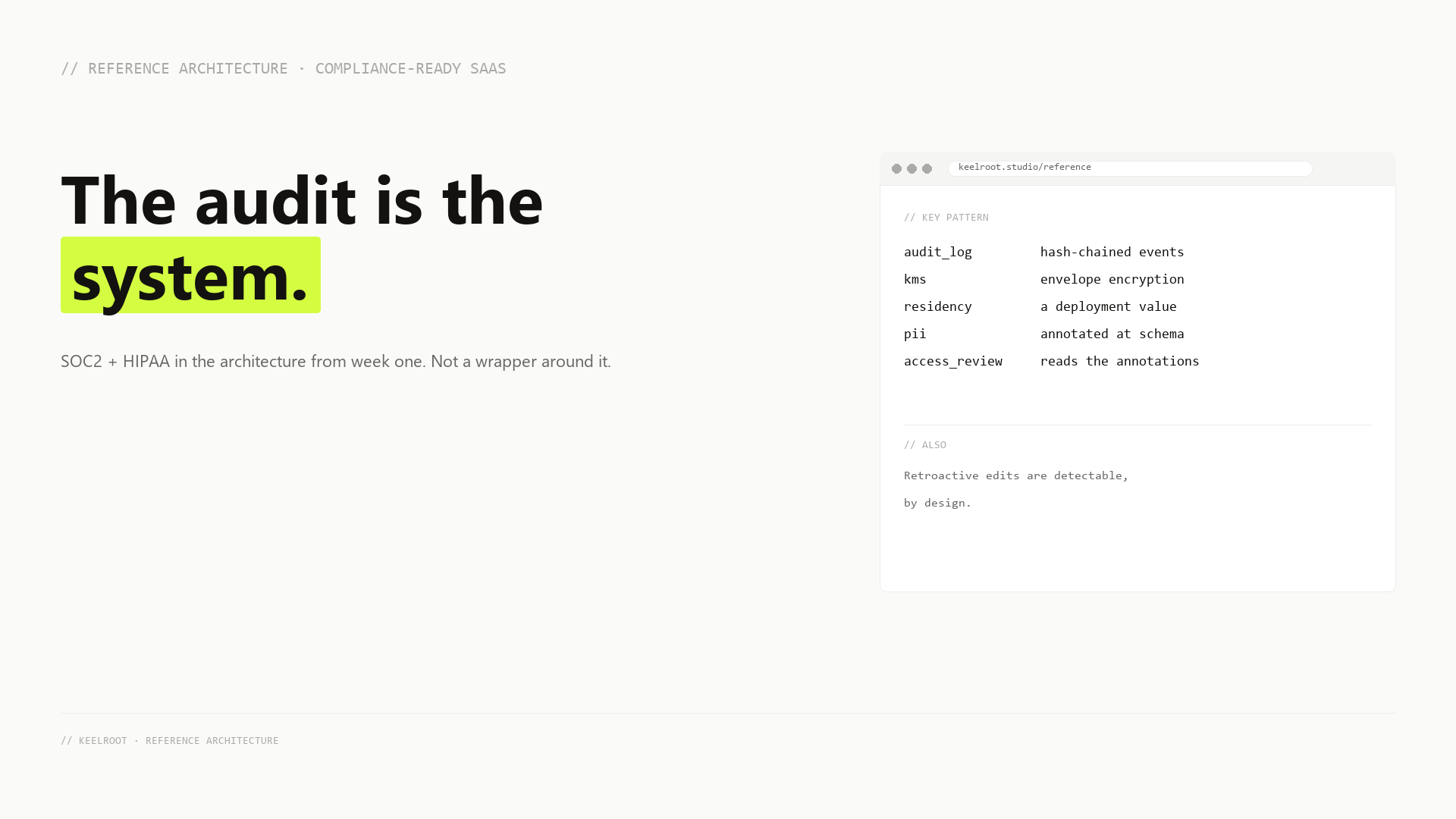
Treat the audit as the system, not a wrapper around it.
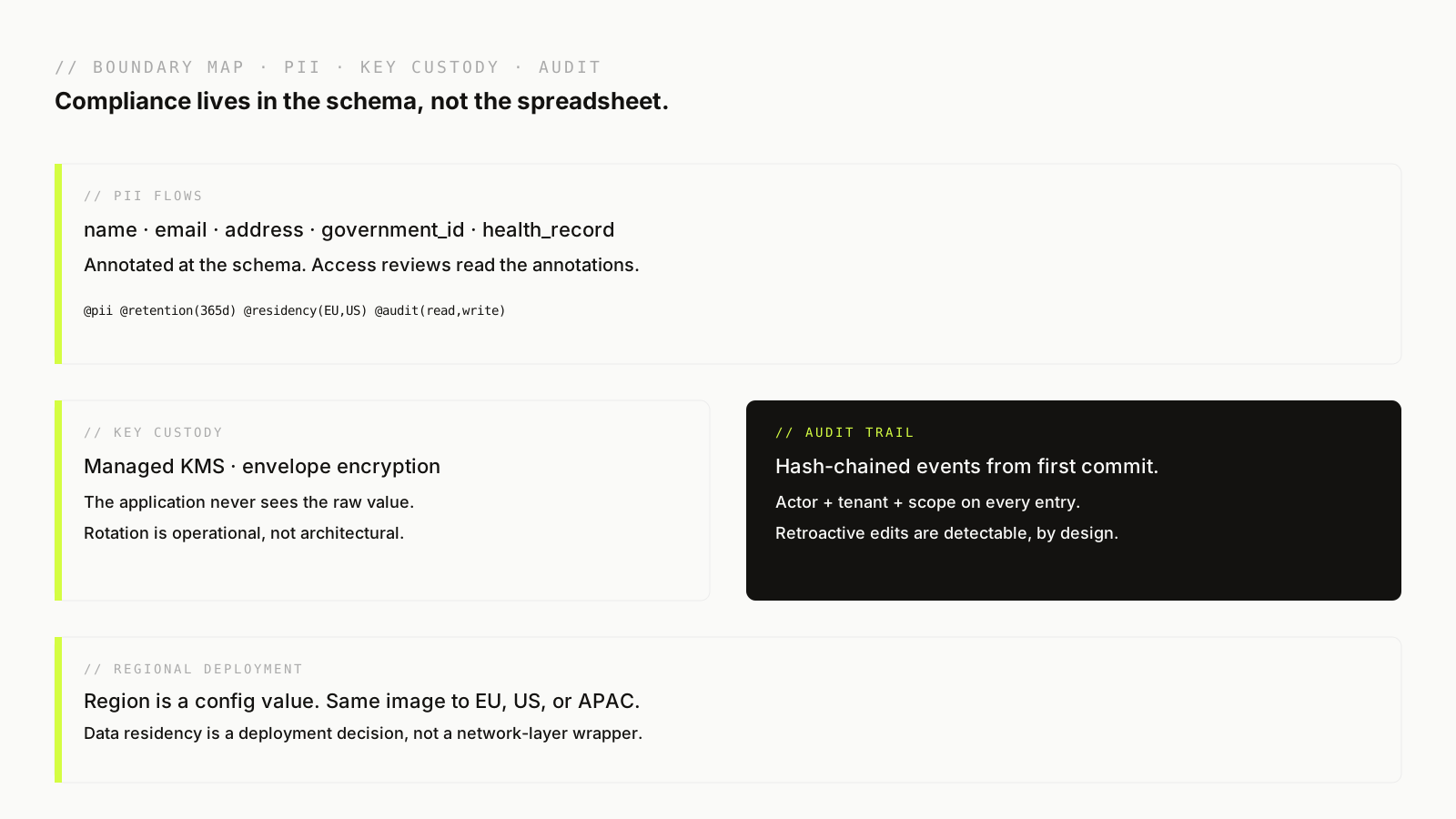 Regulated boundaries · PII flows · key custody
- Lead ArchitectMirko Vanzo
- PatternReference architecture · keelroot studio
- Year2025
- Structured audit logging · hash-chained events
- Managed key store · envelope encryption
- Region-pinned deployments
- Schema-level PII annotations
- SOC2 · HIPAA control mappings